Skunk Removal for Crawlspaces, Under Homes & Yards
Smelling that eye-burning skunk odor around your house, especially at night or early morning? Hearing scratching or digging under the floor or near vents? That usually means a skunk has turned your crawlspace, deck, or foundation into its new den.
This page walks through how skunk problems start, what damage they cause, how odor moves into the home, and what proper skunk removal and prevention actually look like—without poison, flooding, or bad “home remedies” that make things worse.
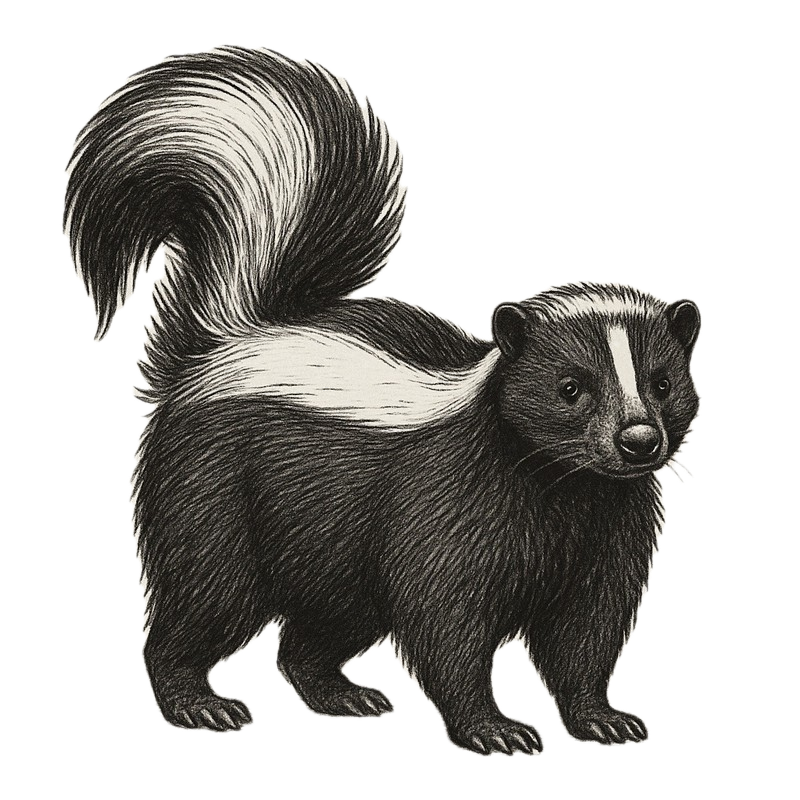
Signs You Have a Skunk Problem
Skunks don’t sneak by quietly. Even if you never see them, you’ll usually smell or hear them. They prefer low, sheltered spaces, not attics—but they can make your whole house smell like a spray bomb.
- Strong skunk odor around the home, especially at night or early morning.
- Smell stronger inside near floor vents, low walls, or certain rooms.
- Scratching or rustling under floors, decks, sheds, or near crawlspace vents.
- Small cone-shaped holes dug in the yard or lawn while they hunt grubs.
- Low “huffing” or chattering sounds under the house or porch.
- Pets going crazy at night near a certain side of the home or fence line.
If the smell comes in waves—strong, then fading, then strong again—that’s often a skunk spraying under or near the structure.
Not Sure if It’s a Skunk?
We narrow it down based on:
- Where the odor is strongest in or around the home.
- Digging patterns and hole size in the yard.
- Tracks, droppings and disturbed soil near the foundation.
- How and when the noises happen (time of night, location).
Call (310) 547-7681 and tell us what you’re smelling and hearing. We’ll talk through whether it’s likely skunks or something else.
Skunk Damage, Odor & Health Risks
Skunks don’t usually tear up roofs like raccoons, but they can create a different kind of headache—odor and contamination that move through the house and yard.
- Overwhelming spray odor in crawlspaces, under decks and near foundations.
- Odor pulled into HVAC through ducts or open crawlspace vents.
- Digging damage in lawns, gardens and planter beds.
- Soiled soil and insulation under homes where skunks den.
- Droppings and parasites in and around den areas.
Once a skunk decides your crawlspace or deck is safe, they’ll keep using it—often year after year—unless the access is closed off properly.
Where Skunks Are Hiding Around Your Home
Skunks like low, protected spaces close to food and water. If there’s a gap, void or shelter near your home, they’ll find it.
- Crawlspaces: through broken vents, missing screens or foundation gaps.
- Under decks and porches: open lattice, missing skirting or dug-out gaps.
- Under sheds: especially on dirt floors or raised pads.
- Retaining walls and slopes: using voids and loose soil as dens.
- Detached garages & small structures: under steps, ramps and platforms.
Finding the exact den location is a critical step before setting up any trapping or one-way systems. If you skip that, you risk trapping skunks where you can’t reach them.
Why “Just Block It” Can Backfire
A common mistake is blocking off openings while skunks are still inside. When they can’t use their normal routes, they panic and may:
- Spray under the home or in tight spaces.
- Dig new, harder-to-find exits.
- Die in inaccessible voids if trapped.
We combine trapping or one-way setups with proper timing and sealing so skunks are gone before everything is closed.
DIY Skunk Removal vs Reality
Skunks are one of the top animals people try to DIY—and one of the most common that goes wrong. A bad move can mean sprayed pets, sprayed crawlspaces, or skunks dying under the house where you can’t reach them.
Common DIY Skunk Mistakes
- Blocking vents or gaps while skunks are still under the home or deck.
- Using repellents or ammonia that just push skunks deeper into the structure.
- Setting traps without understanding laws or how to handle a live, angry skunk.
- Letting pets access active skunk areas and getting them sprayed.
- Failing to seal the structure after a “successful” trap-and-release.
Some DIY steps can help you understand what’s happening, but permanent fixes and safe handling usually require proper tools, experience and construction work.
Our Skunk Removal Process
We treat skunk jobs as both a wildlife problem and a structural issue. If the den area is not closed off correctly, new skunks—or even other species—will move in later.
- 1. Inspection: We locate den sites, access points and any digging or damage around the structure.
- 2. Activity confirmation: We confirm skunks, check for young and map their routes.
- 3. Removal setup: Species-appropriate trapping and/or one-way setups depending on layout and laws.
- 4. Exclusion & repairs: We close off vents, gaps and open areas with proper materials, not flimsy screening.
- 5. Odor and contamination: When needed, we address heavy odor zones and localized cleanup under the home.
What You Get with Professional Skunk Removal
- A clear plan to stop spraying, odor and digging.
- Humane, legal handling of skunks and any young.
- Real exclusion so the den area is no longer available.
- Advice on preventing future activity around your home.
The goal isn’t just “no more smell today.” It’s making sure your crawlspace, deck or yard doesn’t become a skunk hangout again next season.
Talk Through Your Skunk Problem: (310) 547-7681Skunk Removal Costs
Skunk jobs vary based on how easy it is to access the den, how many entry points there are, and how much digging or damage has already happened. A single skunk under a small deck is different from a well-established den under a full crawlspace.
- Inspection & assessment: Based on your location and how complex the access is.
- Removal: Depends on the number of skunks, access and number of visits.
- Exclusion & screening: Cost depends on how many vents, gaps and structures need to be sealed.
- Odor & cleanup options: Based on how long skunks have been present and where they’ve sprayed.
Setting Expectations
Skunk removal is an investment in your home, air quality and sanity. During the inspection, we’ll explain:
- What must be done now vs what can wait.
- What’s optional but recommended for prevention.
- How to avoid repeat visits and new skunk move-ins.
You get straight answers and a step-by-step plan, not vague guesses.
Skunk Removal FAQ
Will skunks spray if we try to trap them?
They can. That’s why trap placement, timing and handling matter. Done correctly, most skunk jobs can be handled with minimal spraying, but there’s always some risk when skunks feel threatened or cornered.
Can I pour bleach or chemicals under the house to drive them out?
That usually makes the situation worse. Harsh chemicals can push skunks deeper into inaccessible spaces, increase spraying and create new health concerns for people and pets inside the home.
Will skunks leave on their own?
Sometimes a skunk will move dens, but if your crawlspace or deck is easy to access, there’s a good chance they or another animal will be back. Odor and droppings often keep attracting new wildlife to the same sheltered spots.
What about baby skunks?
In baby season, we always factor young into the plan. They can’t just be “chased out.” We use methods that account for mothers and young so you don’t end up with babies left behind under the house or deck.
Ready to Get Skunks Out From Under Your Home?
If you’re smelling skunk odor in or around your house, or hearing activity under the floor, don’t wait for it to “go away.” It usually doesn’t.
Call Now: (310) 547-7681
Humane, legal skunk removal and under-home protection.